


- View
Kuku Sabzi is the kind of dish that makes you rethink what an omelette can be. It is packed with herbs until the eggs feel like the supporting cast, and it comes out green, fragrant, and deeply savoury. If you enjoy food that tastes fresh yet feels comforting, this is a brilliant place to start.
In Iranian homes it often appears when people want something that looks special without being fussy. It suits a quiet supper with yoghurt and salad, and it also holds its own on a spread for guests. You can eat it warm, at room temperature, or cold from the fridge, and it still tastes like it means business.
There is also something very welcoming about the way it fits into a meal. Put it next to flatbread, pickles, a bowl of mast o khiar, or a squeeze of citrus, and suddenly dinner feels generous. It is simple, but it never feels plain, because the herbs do the heavy lifting.
Want to dive deeper into Iranian Cuisine? Don’t miss our post on Traditional Iranian Foods to Try
What Is Kuku Sabzi?
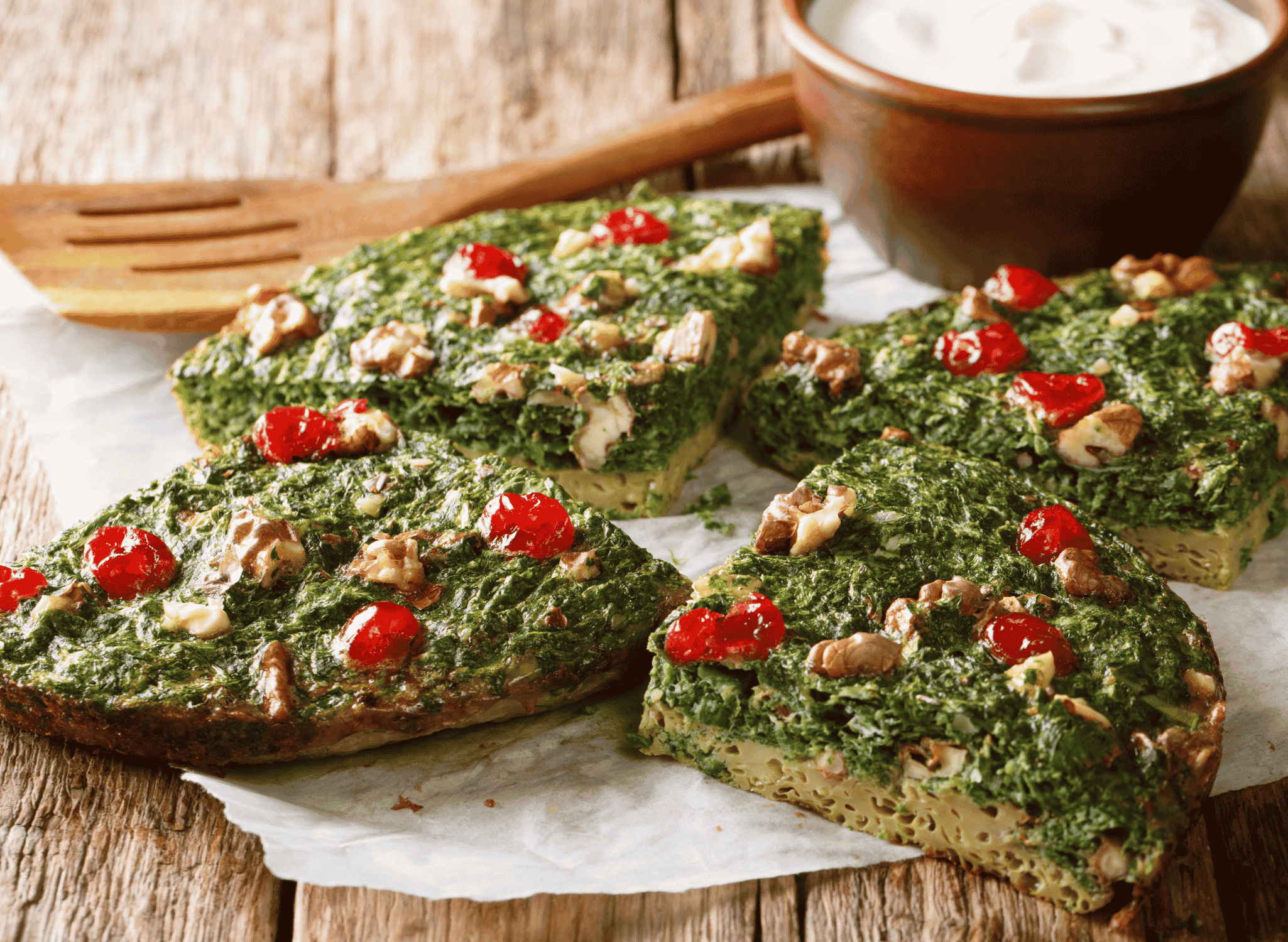
Kuku Sabzi is an Iranian herb frittata, usually cooked as a thick round that can be sliced like a cake. Eggs bind a mountain of chopped greens, then the mixture is gently set until firm and browned. Some people fry it in a pan, others bake it, and both routes can be excellent.
The texture is part of the appeal. Done well, it is tender inside with a delicate crust outside. The herbs stay lively rather than collapsing into mush, and each slice holds together neatly. It is the sort of dish that looks cheerful on a plate, especially with a bright garnish.
You will hear it served during Nowruz, the Persian New Year, because greens and fresh herbs speak of renewal. That said, it is not reserved for holidays. Many families cook it year round, adjusting the herbs to suit the season or whatever looks best at the greengrocer.
Ingredients and Taste
The classic version relies on a generous mix of herbs such as parsley, coriander, dill, and chives or spring onions. Spinach is common too, sometimes alongside a little fenugreek if you like a deeper herbal edge. Eggs pull everything together, while turmeric warms the colour and scent.
Many cooks add a handful of chopped walnuts for richness and a gentle crunch. Barberries are also popular, bringing little pops of tartness that cut through the egg. In some kitchens you will find a touch of saffron, or a pinch of dried lime powder, used carefully so the herbs stay centre stage.
The taste is vivid and layered. Parsley gives a clean, green backbone, coriander adds citrusy perfume, dill brings a soft sweetness, and chives give a mild onion note. Turmeric sits in the background like a low hum. If barberries are included, you get bright, tangy bursts.
Because the herbs dominate, Kuku Sabzi feels lighter than many egg dishes, yet it still satisfies. It works beautifully with plain yoghurt, a spoon of thick labneh, or a salad dressed with lemon. If you like heat, a little chilli on the side is welcome, but it is not required.
A Taste of History
Herbs have long played a central role in Iranian cooking, not as garnish but as a main flavour. Dishes built around sabzi, meaning greens and herbs, show up across the cuisine, from stews to rice dishes to platters of fresh herbs served with cheese. Kuku Sabzi sits comfortably in that tradition.
Its place at Nowruz gives it particular meaning. The Persian New Year celebrates spring and new beginnings, and a dish so full of green fits that mood naturally. Families often prepare it alongside other symbolic foods, and it becomes part of the shared table that marks a fresh start.
Over time, home cooks have shaped it to match their own tastes and regions. Some prefer it thick and cake like, others thinner with more crust. Some bake it for a lighter finish, others pan fry for a deeper browned edge. Even with these differences, the heart of the dish stays the same.
For someone trying it for the first time, it offers a very direct introduction to Iranian flavour. It shows how confidently the cuisine uses herbs, and how it balances richness with freshness. It is everyday food with cultural weight, served without ceremony yet full of intention.
How to Make Kuku Sabzi (Persian Herb Frittata)
Kuku Sabzi is a deeply aromatic Iranian herb frittata where greens take centre stage rather than eggs. Expect a vivid green interior, crisp edges, and a fragrance shaped by herbs and warm spices. Precision in chopping and gentle cooking are key to preserving its colour and character. See the recipe card at the bottom for printable directions
Ingredients
- 6 large free-range eggs
- 120 g fresh parsley, finely chopped
- 120 g fresh coriander, finely chopped
- 80 g fresh dill, finely chopped
- 60 g spring onions, finely sliced
- 2 tbsp dried fenugreek leaves
- 2 tbsp walnuts, finely chopped
- 1 tbsp barberries, lightly rinsed
- ½ tsp ground turmeric
- ¼ tsp ground cumin
- ¼ tsp ground black pepper
- Salt to taste
- 4 tbsp vegetable oil or sunflower oil
Cooking Instructions
Step 1: Prepare the herbs
Wash all fresh herbs thoroughly and dry them completely using a clean cloth. Finely chop them by hand rather than using a processor to avoid bruising. Transfer to a large mixing bowl and move on to the egg mixture.
Step 2: Build the egg base
Crack the eggs into a separate bowl and whisk gently until just combined. Season with salt and black pepper, then add turmeric and cumin. Pour the eggs over the chopped herbs to begin forming the batter.
Step 3: Add traditional mix ins
Stir in the dried fenugreek, walnuts, and barberries. Mix gently until evenly distributed, ensuring the herbs remain dominant over the eggs. Allow the mixture to rest for 5 minutes to absorb flavour.
Step 4: Heat the pan
Place a non-stick frying pan over medium heat and add the oil. Once shimmering but not smoking, swirl the oil to coat the base and sides evenly. This prepares the pan for even cooking.
Step 5: Cook the base
Pour the herb mixture into the pan and spread it gently with a spatula. Reduce heat to medium low, cover with a lid, and cook for 12 to 15 minutes until the base is set and the edges are lightly crisped.
Step 6: Turn the kuku
Slide the kuku onto a flat plate. Carefully invert it back into the pan to cook the other side. Cook uncovered for a further 8 to 10 minutes until firm and evenly coloured.
Step 7: Rest the kuku
Remove from the pan and allow it to rest for 5 minutes. This helps the interior settle and makes slicing cleaner. Prepare your serving plate while resting.
Step 8: For serving
Slice into wedges and serve warm or at room temperature. Garnish with extra walnuts or barberries if desired. Move directly to plating and accompaniments.
Variations and Substitutions
- Barberries can be replaced with dried cranberries finely chopped and lightly tartened with lemon juice
- Fenugreek leaves may be substituted with a small pinch of celery leaves or extra dill
- Walnuts can be replaced with almonds, though the flavour will be milder
- Oil may be swapped for olive oil, though a neutral oil is more traditional
Cooking Tips for Perfect Kuku Sabzi
- Chop herbs very finely to achieve a cohesive texture
- Keep the egg quantity modest so the herbs remain the focus
- Cook gently to maintain the deep green colour
- Allow resting time before slicing to prevent crumbling
How to Store and Reheat
Cooling and Fridge Storage
Let Kuku Sabzi cool until it is no longer steaming, then move it to an airtight container. If you stack slices, place baking paper between them to prevent sticking. In the fridge it keeps well for about three to four days, and the flavour often deepens as it rests.
If you plan to serve it cold, cut slices once chilled for cleaner edges. Cold kuku is lovely with pickles and bread, and it makes an easy packed lunch. Keep it away from strongly scented foods in the fridge, since eggs and herbs can absorb odours.
Freezing for Later
Kuku Sabzi freezes better than you might expect. Slice it, wrap each piece tightly, then place the wrapped slices in a freezer bag or container. This way you can take out only what you need. Aim to use it within two months for the best texture and flavour.
Defrost overnight in the fridge rather than on the counter. The herbs hold up well, though the texture will be slightly softer after freezing. If you included lots of barberries, the tart notes can mellow a little, which many people find pleasant.
Reheating in a Pan
For a crisp edge, warm a non stick pan over a low to medium heat and add a small amount of oil. Heat slices gently for a few minutes on each side until warmed through. This method brings back the browned surface and keeps the inside tender.
Avoid high heat, which can dry the eggs and dull the herb flavour. If the slice is thick, cover the pan briefly so the centre warms without over browning the outside. Serve straight away with yoghurt or a squeeze of lemon for lift.
Reheating in the Oven or Microwave
The oven is useful when reheating several slices. Place them on a tray, cover loosely with foil, and warm at a moderate temperature until hot. The foil prevents the top from drying out. Remove it for the last minute if you want a slightly crisper finish.
The microwave is quickest, but use it gently. Heat in short bursts and stop as soon as it is warm. Overheating turns eggs rubbery and can make herbs taste tired. If you microwave, consider finishing with a fresh herb sprinkle or a dab of yoghurt to brighten it.
Serving After Reheating
Kuku Sabzi is forgiving, but it shines with the right companions. After reheating, add something sharp and cool, like yoghurt, torshi, or sliced tomatoes with lemon. A little fresh herb on top does not feel decorative, it restores that green aroma right at the surface.
If you are serving guests, bring it to the table at warm room temperature rather than piping hot. The flavour comes through more clearly that way. Cut clean slices, and let the herbs do their work, because that is the whole point of this dish.

Kuku Sabzi (Herb Frittata)
Ingredients
- 6 large free range eggs
- 120 g fresh parsley finely chopped
- 120 g fresh coriander finely chopped
- 80 g fresh dill finely chopped
- 60 g spring onions finely sliced
- 2 tbsp dried fenugreek leaves
- 2 tbsp walnuts finely chopped
- 1 tbsp barberries lightly rinsed
- ½ tsp ground turmeric
- ¼ tsp ground cumin
- ¼ tsp ground black pepper
- Salt to taste
- 4 tbsp vegetable oil or sunflower oil
Instructions
- Wash all fresh herbs thoroughly and dry them completely using a clean cloth. Finely chop them by hand rather than using a processor to avoid bruising. Transfer to a large mixing bowl and move on to the egg mixture.
- Crack the eggs into a separate bowl and whisk gently until just combined. Season with salt and black pepper, then add turmeric and cumin. Pour the eggs over the chopped herbs to begin forming the batter.
- Stir in the dried fenugreek, walnuts, and barberries. Mix gently until evenly distributed, ensuring the herbs remain dominant over the eggs. Allow the mixture to rest for 5 minutes to absorb flavour.
- Place a non stick frying pan over medium heat and add the oil. Once shimmering but not smoking, swirl the oil to coat the base and sides evenly. This prepares the pan for even cooking.
- Pour the herb mixture into the pan and spread it gently with a spatula. Reduce heat to medium low, cover with a lid, and cook for 12 to 15 minutes until the base is set and the edges are lightly crisped.
- Slide the kuku onto a flat plate. Carefully invert it back into the pan to cook the other side. Cook uncovered for a further 8 to 10 minutes until firm and evenly coloured.
- Remove from the pan and allow it to rest for 5 minutes. This helps the interior settle and makes slicing cleaner. Prepare your serving plate while resting.
- Slice into wedges and serve warm or at room temperature. Garnish with extra walnuts or barberries if desired. Move directly to plating and accompaniments.
Leave a Review